

Internal hemorrhoids are a common medical condition that affects many individuals, often causing discomfort and anxiety. These hemorrhoids occur inside the rectum, making them less visible but no less troublesome than their external counterparts.
In this article, we’ll delve into the details of what internal hemorrhoids feel like, how they look, the differences between internal and external hemorrhoids, and effective treatment options, especially for those at Grade 2.
Key takeaways
- Internal hemorrhoids sit inside the rectum and are usually painless. The most common sign is bright red blood after a bowel movement.
- They are graded 1 to 4 by how far they come out, and the grade guides the treatment.
- Most internal hemorrhoids are treated with diet changes or a quick in-office procedure such as rubber band ligation, without surgery.
- Any rectal bleeding should be checked by a doctor, because other conditions can cause it too.
What do Internal Hemorrhoids Feel Like?
The sensations associated with internal hemorrhoids can vary. Typically, they do not cause pain due to the lack of pain-sensitive nerves in the rectum. However, they can lead to a feeling of fullness or pressure in the rectal area, particularly during bowel movements. Some may experience itching, discomfort, or the sensation that they haven’t completely emptied their bowels. If internal hemorrhoids prolapse, which means they extend out of the anus, they may become painful, particularly if they become strangulated.
What do Internal Hemorrhoids Look Like?
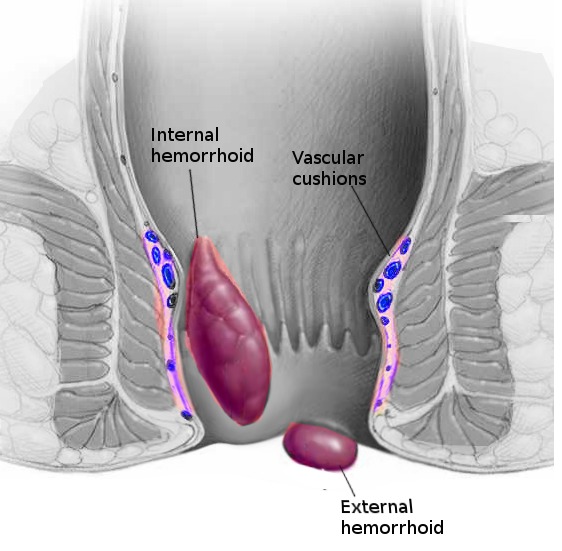
Since internal hemorrhoids are located inside the rectum, they are not visible without medical intervention. However, in cases of prolapsed internal hemorrhoids, they may extend outside the anus and appear as small, swollen lumps. These lumps are usually pink or reddish and soft, and they often slip back inside on their own or can be pushed back gently. It’s important to consult with a healthcare provider for a proper diagnosis, as these visual cues can often be mistaken for other conditions, such as skin tags or external hemorrhoids.
Can Internal Hemorrhoids Cause Constipation?
Internal hemorrhoids themselves do not directly cause constipation, but they can contribute to it. The discomfort and sensation of fullness caused by hemorrhoids can lead some individuals to avoid bowel movements, exacerbating constipation. Additionally, the pain or discomfort during defecation might result in incomplete evacuation, further contributing to constipation.
Preventing hemorrhoid-related constipation involves several lifestyle changes:
- Increase Fiber Intake: Increasing fiber intake is crucial for maintaining digestive health and preventing conditions like hemorrhoids. A diet rich in fiber softens stools and makes them easier to pass, reducing the need to strain. Fruits, vegetables, beans, whole grains and ground flaxseed are good sources, and a fiber supplement such as ColoFlax Fiber Gummies can help if your diet falls short.
- Stay Hydrated: Drinking plenty of water throughout the day keeps stools soft.
- Avoid Straining: Avoid straining during bowel movements, as this can increase pressure on the rectal veins and contribute to issues like hemorrhoids. To reduce the risk of straining, consider using a squatty potty or a similar device. By elevating your feet and adjusting your posture, a squatty potty helps promote a more natural position for bowel movements, making the process easier and reducing unnecessary pressure on the rectal area.
In some cases, laxatives or stool softeners might be recommended to help ease constipation, but these should be used under the guidance of a healthcare provider.
Prolapsed Internal Hemorrhoids: When to Seek Help
A prolapsed internal hemorrhoid occurs when the hemorrhoid extends outside the anal canal. This condition can be particularly uncomfortable, causing symptoms like pain, itching, and bleeding. Prolapsed hemorrhoids are often classified into grades, with Grade 2 being one of the more common stages. At this stage, the hemorrhoid may protrude during bowel movements but typically retract on its own afterward. If you’re experiencing persistent discomfort or prolapsed hemorrhoids, it’s essential to seek medical advice. Early intervention can prevent complications and alleviate symptoms effectively.
Internal Hemorrhoid Grades and the Right Treatment
Doctors grade internal hemorrhoids from 1 to 4 based on whether they come out of the anus and whether they go back in. Knowing the grade is the quickest way to understand which treatment makes sense.
- Grade 1: swells inside the anal canal and may bleed, but does not come out. Usual treatment: fiber, fluids and not straining, with an office procedure if bleeding keeps coming back.
- Grade 2: comes out during a bowel movement and goes back in on its own. Usual treatment: lifestyle changes, often combined with rubber band ligation.
- Grade 3: comes out and has to be pushed back in by hand. Usual treatment: rubber band ligation or THD, and sometimes surgery.
- Grade 4: stays outside and cannot be pushed back in. Usual treatment: usually surgery, such as a hemorrhoidectomy.
Your doctor confirms the grade during an exam, so you don’t have to work it out yourself.
How to Treat Internal Hemorrhoids Grade 2
Treatment for grade 1 and grade 2 internal hemorrhoids usually begins with lifestyle changes and home remedies. Increasing dietary fiber intake, staying hydrated, and avoiding straining during bowel movements can significantly reduce symptoms.
For more persistent or severe cases, medical procedures may be necessary. Rubber band ligation is a common method for treating grade 2 internal hemorrhoids, and it is also used for many grade 3 hemorrhoids.

External Vs Internal Hemorrhoids: Understanding the Differences
It’s crucial to understand the differences between external and internal hemorrhoids, as this can influence treatment options. External hemorrhoids form under the skin around the anus and are typically more painful due to the presence of numerous pain-sensitive nerves in that area. They can also become thrombosed, leading to significant discomfort. In contrast, internal hemorrhoids develop inside the rectum and are generally less painful but can cause bleeding, prolapse, and discomfort.
One key difference lies in their treatment. While external hemorrhoids may require topical treatments or surgical intervention, especially when a painful thrombosed hemorrhoid forms, internal hemorrhoids, particularly at Grade 2, can often be managed with less invasive approaches. Understanding these differences helps in identifying the right course of action and ensuring effective treatment.

How Long Do Internal Hemorrhoids Last?
The duration of internal hemorrhoids varies depending on several factors, including the severity of the hemorrhoids and how they are managed. Mild hemorrhoids often settle on their own with proper care, such as increased fiber intake and hydration. However, more severe cases, including prolapsed hemorrhoids, may persist longer and require medical treatment.
Home remedies and lifestyle changes often bring relief within a week. If symptoms persist beyond this period, or if there is significant pain or bleeding, it is crucial to consult a healthcare provider.
Internal Hemorrhoids Treatment
Treatments become necessary if the problem persists or the condition of a patient is severe. Some of the minimally invasive treatments available to treat internal hemorrhoids include:
- Rubber Band Ligation: Rubber band ligation is a popular procedure used to treat internal hemorrhoids. Internal hemorrhoids occur inside the rectum and can cause symptoms such as bleeding, itching, and discomfort. This treatment is often recommended when lifestyle changes and other conservative treatments haven’t brought adequate relief. It’s a minimally invasive procedure that involves placing a rubber band around the base of the hemorrhoid to cut off its blood supply.
- Transanal hemorrhoidal dearterialization (THD): Transanal hemorrhoidal dearterialization is a minimally invasive procedure used to treat internal hemorrhoids. During THD, a surgeon uses Doppler ultrasound technology to locate and tie off the arteries supplying blood to the hemorrhoids, causing them to shrink over time. This technique reduces hemorrhoidal symptoms such as bleeding and discomfort, while preserving the natural anatomy of the rectum. Because THD is less invasive than traditional hemorrhoid surgery, it typically results in faster recovery times and less postoperative pain.
- Hemorrhoidectomy: Surgical removal is usually kept for large grade 3 or grade 4 hemorrhoids, or for hemorrhoids that keep returning after office treatment. It is the most thorough option but has the longest recovery. Our guide to hemorrhoid banding vs. hemorrhoidectomy compares the two.
What to Expect at Your Rubber Band Ligation Appointment
Rubber band ligation is the treatment most people with grade 2 or grade 3 internal hemorrhoids end up having, so here is how a visit usually goes:
- Consultation and exam. The doctor asks about your symptoms and looks inside the anal canal to confirm the hemorrhoids and their grade.
- The procedure. A small rubber band is placed around the base of the hemorrhoid. It is done in the office and takes only a few minutes. The band sits above the pain-sensitive area, so no general anesthesia is needed.
- Right after. A feeling of fullness or a dull ache for a day or two is common. Most people go home straight away and return to normal activities quickly.
- The following days. Without its blood supply, the hemorrhoid shrinks and falls off, usually within about a week. You may notice a little blood when that happens.
- More than one session. If you have several hemorrhoids, they are often treated over a few visits spaced a few weeks apart.
For aftercare, read our recovery tips after hemorrhoid banding.
When to See a Doctor About Internal Hemorrhoids
Hemorrhoids are the most common cause of bright red blood after a bowel movement, but they are not the only one. Any rectal bleeding should be checked by a doctor, even if you are fairly sure it is a hemorrhoid.
Get medical care promptly if you notice:
- Heavy bleeding, or bleeding that does not stop
- Dizziness or feeling faint along with bleeding
- A hemorrhoid that has come out, will not go back in, and is very painful
- Fever, or pain that keeps getting worse
- Black or tarry stools, or a lasting change in your bowel habits
Internal Hemorrhoids Treatment FAQs
Can internal hemorrhoids go away without treatment?
Mild internal hemorrhoids often settle with more fiber, enough fluids and less straining. Hemorrhoids that keep bleeding or keep coming out usually need treatment to go away for good.
Is rubber band ligation painful?
Most people feel pressure or a dull ache afterward rather than sharp pain, because the band is placed above the area that has pain-sensitive nerves.
How many banding sessions will I need?
It depends on how many hemorrhoids you have. Some people need one visit; others have a few sessions spaced several weeks apart.
Do internal hemorrhoids need surgery?
Most do not. Surgery is usually reserved for grade 4 hemorrhoids or for hemorrhoids that keep returning after office treatment.
Is bleeding from internal hemorrhoids dangerous?
Hemorrhoid bleeding is usually light, but rectal bleeding can also come from other conditions, including colon polyps and colorectal cancer. That is why any bleeding should be checked, and why your doctor may recommend a colonoscopy.
Internal hemorrhoids, while often uncomfortable, require prompt and effective treatment to prevent further complications. Understanding the symptoms, appearance, and differences between internal and external hemorrhoids is crucial, but taking immediate action is even more important. If you’re dealing with Grade 2 internal hemorrhoids or experiencing a prolapse, don’t wait—schedule an appointment for hemorrhoid treatment in Tampa at ColoWell America today. Early consultation and treatment are essential for relief and to avoid more severe issues. Book your consultation now to take control of your health and get the expert care you need.
-Disclaimer-
The information provided on this website is for educational and informational purposes only and is not intended as medical advice. Always consult with a qualified healthcare provider regarding any medical concerns, conditions, or treatment options. Individual results may vary. The information provided or services described are not intended to diagnose, treat, cure, or prevent any disease. Any medical or aesthetic procedure should be discussed thoroughly with a licensed professional before beginning treatment.

ColoWell America's Commitment
Discover Trustworthy Solutions for Internal Hemorrhoid Relief
At ColoWell America, we recognize that facing internal hemorrhoids can be overwhelming and challenging. Our compassionate team is here to provide personalized support that caters to your distinct needs. Dr. Shiraz Farooq, our board-certified colorectal surgeon, offers in-office options such as rubber band ligation and THD, and will recommend the least invasive treatment that fits your hemorrhoids.


Dr. Shiraz Farooq
Dr. Shiraz Farooq is a board certified Colon and Rectal Surgeon and the driving force behind ColoWell America. He has been practicing medicine and surgery in Tampa, Florida for over a decade and has received multiple academic awards for his expertise.
EDUCATION:
M.B.B.S University of Karachi, Baqai Medical College, Pakistan 1994-1996
Aga Khan University, Karachi, Pakistan 1990 - 1994
TRAINING:
Colon and Rectal Surgery, Fellow Grant Medical Center, Columbus, OH 2008-2009 Critical Care Surgery, Fellow University of Rochester, NY 2001-2002
General Surgery Residency SUNY Buffalo, NY 2004
PROFESSIONAL EXPERIENCE:
Colorectal Surgeon - ColoWell America 2018 - Present
Colon and Rectal Surgeon - Locicero Medical Group, Tampa, Florida 2017- 2018 Colon and Rectal Surgeon - HemWell America, Tampa, Florida 2016-2017
Colon and Rectal Surgeon - Central Maine Medical Center, Lewiston, Maine 2013-2016 Locum Tenens Surgeon - Parkview Adventist Hospital, Brunswick, Maine 2012-2013
Colon and Rectal Surgeon - St. Joseph North Hospital, Lutz, Florida 2010-2011
Colon and Rectal Surgeon - St. Francis Hospital, Greenville, South Carolina 2009-2010
General Surgeon - Coquille Valley Hospital, Oregon 2004-2008.