

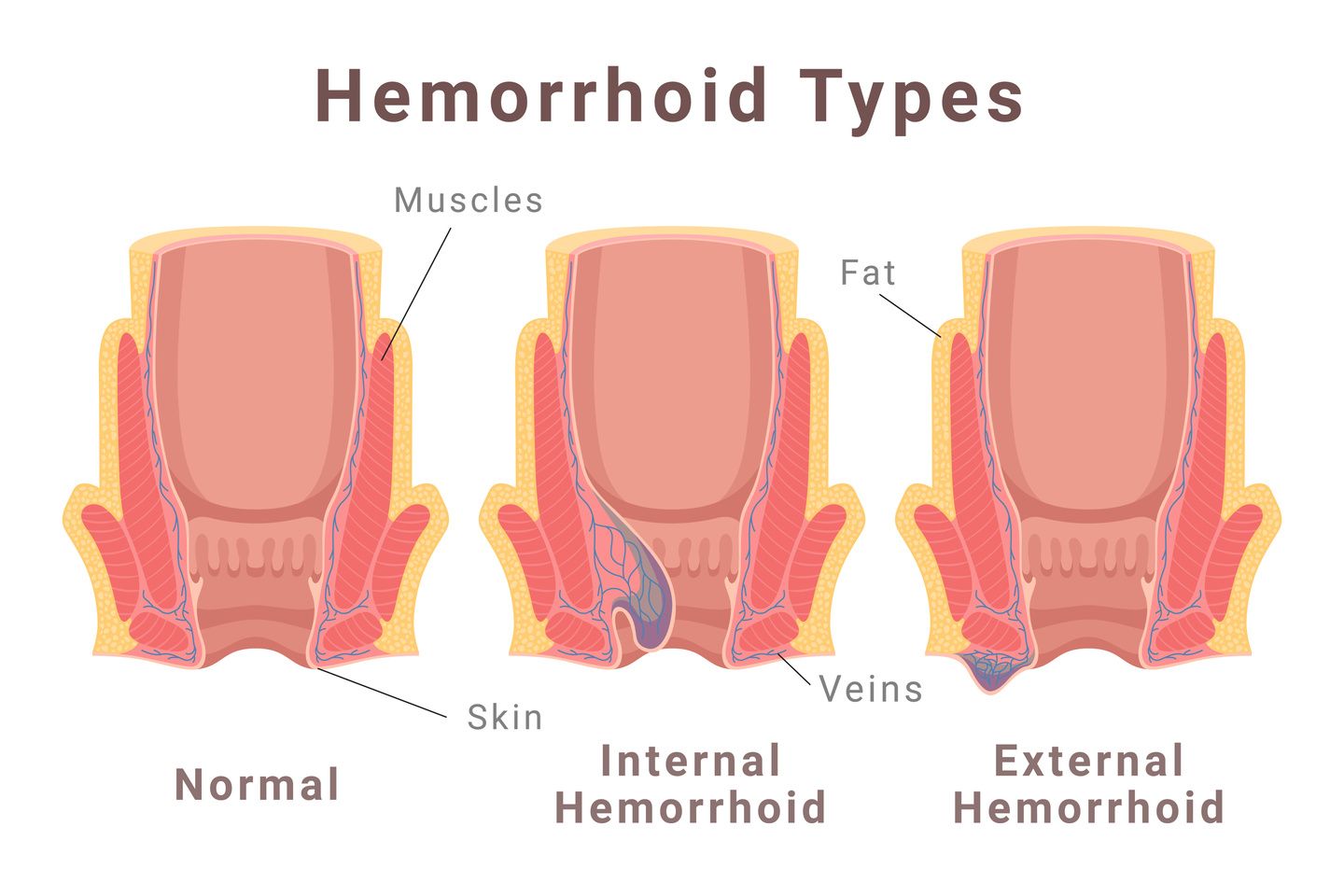
Also known as ‘piles’, Hemorrhoids are swollen veins in or around the anus and rectum. While they’re common and often minor, they can lead to discomfort or even severe pain if untreated. Hemorrhoids appear as lumps of various sizes and can occur internally or externally.
The four primary types of hemorrhoids include Internal, External, Prolapsed, and Thrombosed.
What Are Hemorrhoids?
To begin with, let’s get to the bottom of what hemorrhoids actually are. Hemorrhoids, sometimes known as “piles,” are swollen veins located inside or around the rectum and anus. When these blood vessels become swollen, they can cause a variety of uncomfortable symptoms. You might experience itching, pain, burning, or even bleeding. Hemorrhoids vary widely in severity, from mildly itchy and annoying to severe and intensely painful.
It’s important to remember that hemorrhoids are a common condition. Millions of people deal with them, so there’s no need to feel embarrassed or avoid seeking help. Doctors regularly address hemorrhoid issues, so don’t hesitate to make an appointment to discuss them.
What Causes Hemorrhoids?
There are several risk factors and lifestyle elements that increase the likelihood of developing hemorrhoids:
- Obesity – Extra weight can put pressure on the rectal and anal veins.
- Pregnancy – Pressure from the growing uterus often leads to hemorrhoids.
- Straining during bowel movements – Pushing too hard increases rectal pressure.
- Prolonged sitting – Staying seated for long periods can add pressure to the area.
- Chronic diarrhea or constipation – Both conditions inflame the rectal area, increasing risk.
- Low-fiber diet – It can make stools harder to pass.
- Frequent use of laxatives – Overuse can disrupt bowel regularity.
- Aging – The tissue supporting veins in the rectum and anus weakens over time.
Let’s look at each type of hemorrhoid and its symptoms.
1. What are Internal Hemorrhoids?
Internal hemorrhoids develop within the rectum and are often painless since this area lacks many nerve endings. They are typically out of sight and may go unnoticed until symptoms arise.
Symptoms of Internal Hemorrhoids:
- Itching or burning in the rectal area
- A sensation of fullness or a lump
- Light bleeding during or after a bowel movement
- Discomfort or pressure, particularly during bowel movements
Most internal hemorrhoids resolve on their own, but treatment can help alleviate discomfort.
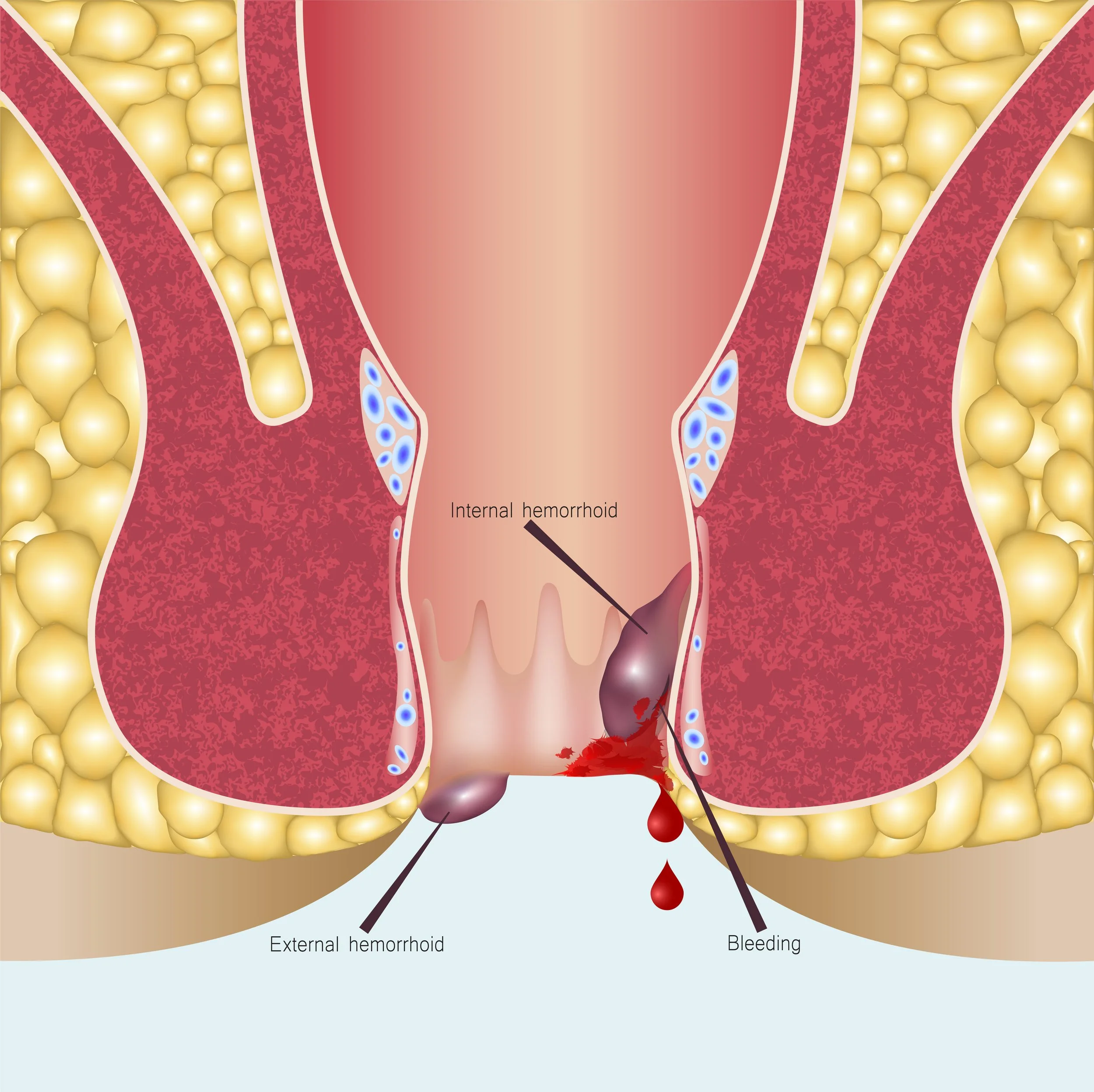
2. What are External Hemorrhoids?
External hemorrhoids occur under the skin around the anus and are more likely to be felt or seen as small lumps on the skin’s surface.
Symptoms of External Hemorrhoids:
- Persistent itching and burning
- Swelling and lumps around the anus
- Bluish hue if the hemorrhoid is visibly swollen
- Pain, especially when sitting or during bowel movements
- Light bleeding after bowel movements
External hemorrhoids can be more uncomfortable than internal hemorrhoids, as the outer area of the anus contains more nerve endings.
3. What are Prolapsed Hemorrhoids?
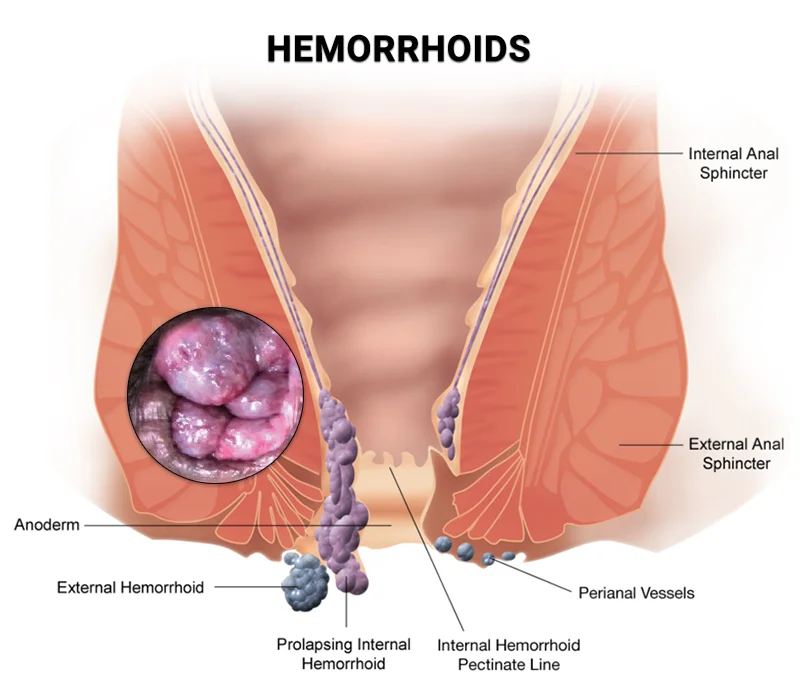
Prolapsed hemorrhoids are internal hemorrhoids that have pushed out of the anus due to strain. They can be graded on a severity scale from 1 to 4, depending on how far they protrude and if they retract on their own.
Symptoms of Prolapsed Hemorrhoids:
- Red, swollen lumps protruding from the anus
- Pain, itching, or a burning sensation
- May retract on their own or may need manual assistance
- Severe cases may require surgery
Prolapsed hemorrhoids can become painful, especially if they are not managed properly, as they may not retract on their own.
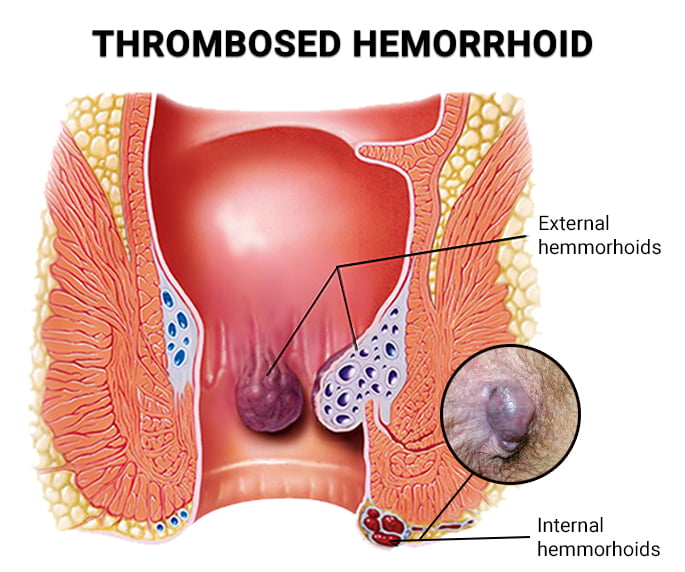
4. What are Thrombosed Hemorrhoids?
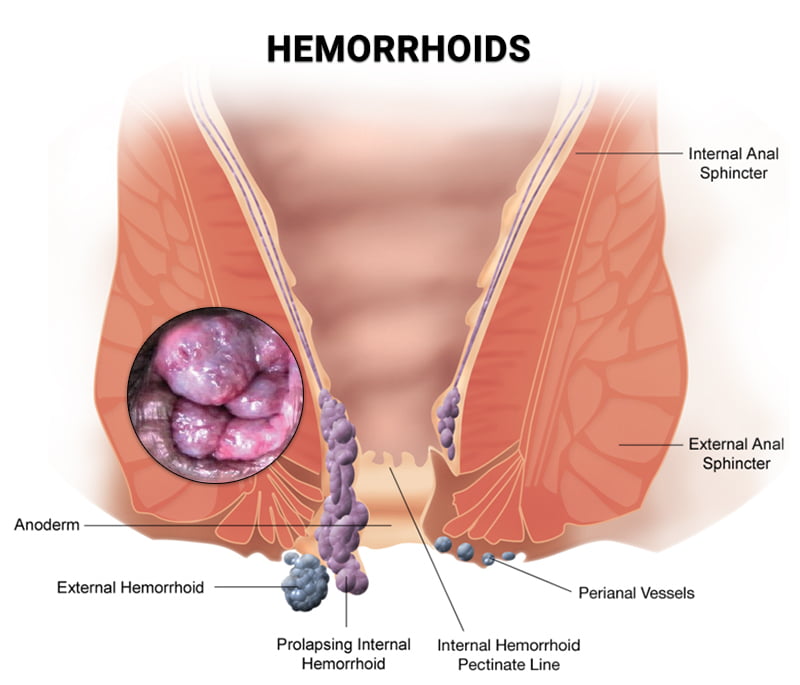
Thrombosed hemorrhoids are external or internal hemorrhoids in which a blood clot has formed, causing severe swelling, discomfort, and potential complications.
Symptoms of Thrombosed Hemorrhoids:
- Intense pain and swelling around the anus
- Blue or purple hue around the affected area
- Redness and sensitivity
- Itching or a feeling of fullness
Because of the blood clot, Thrombosed Hemorrhoids can be perilous and require prompt medical attention to prevent complications and alleviate pain.
When to Consult a Specialist
While most hemorrhoids resolve with home treatments, it’s important to consult a doctor if:
- Your hemorrhoid symptoms persist or worsen
- You experience significant pain, bleeding, or changes in bowel habits
- You’re over 40 and experiencing rectal bleeding (as this could be a sign of other conditions)
Prompt medical attention ensures proper treatment and can help rule out other conditions that may mimic hemorrhoid symptoms.
Reach out today for consultation with a board-certified colorectal surgeon at ColoWell America of Tampa to ditch that itch!
-Disclaimer-
The information provided on this website is for educational and informational purposes only and is not intended as medical advice. Always consult with a qualified healthcare provider regarding any medical concerns, conditions, or treatment options. Individual results may vary. The information provided or services described are not intended to diagnose, treat, cure, or prevent any disease. Any medical or aesthetic procedure should be discussed thoroughly with a licensed professional before beginning treatment.